

Creating a chic bar setting at home or in a commercial space requires thoughtful investment in the right furniture. From stylish bar stools to elegant counters, the choices can transform any area into a sophisticated gathering spot. This article explores the essential types of bar furniture that not only enhance aesthetics but also elevate the overall experience for guests.
Key Takeaways
- Invest in Essential Pieces: Key bar furniture includes bar stools and tables, which significantly impact the ambience and functionality of your setting.
- Select Appropriate Heights: Bar stools typically range from 65 to 80 cm and tables from 90 to 110 cm, tailoring your choices to your space for optimal comfort and usability.
- Prioritise Design Style: Choose between modern aesthetics with sleek lines and materials like metal and glass, or vintage looks with reclaimed wood and classic upholstery to align with your desired theme.
- Emphasise Functionality: Focus on space optimisation and ergonomics by selecting versatile and comfortable furniture, such as stackable stools or height-adjustable bar stools.
- Choose Durable Materials: Opt for robust materials like hardwood, metal, and easy-to-clean upholstered fabrics to enhance both the style and longevity of your bar furniture.
- Create Comfortable Experiences: Ensure your chosen furniture promotes guest comfort, with features such as lumbar support and cushioned seating for extended enjoyment of your bar setting.
Types of Bar Furniture
Selecting the right types of bar furniture is essential for creating a stylish and functional bar setting. Key items include bar stools and bar tables, which influence the overall ambience and usability of the space.
Bar Stools
Bar stools come in various heights and designs, accommodating different counter styles. The ideal bar stool height typically ranges from 65 to 80 cm for standard bar counters. Materials can include wood, metal, or upholstered fabric, allowing for both comfort and aesthetic appeal. Select stools with stable bases and ergonomic designs to enhance guest comfort and encourage longer stays.
Bar Tables
Bar tables play a crucial role in determining the layout and flow of a bar area. Heights usually vary from 90 to 110 cm for a chic setting. Round tables are ideal for smaller spaces, fostering conversation, while rectangular tables work well in larger areas providing ample space for drinks and food. Choosing durable materials, such as hardwood or metal, ensures long-term use while maintaining style.
Style Considerations
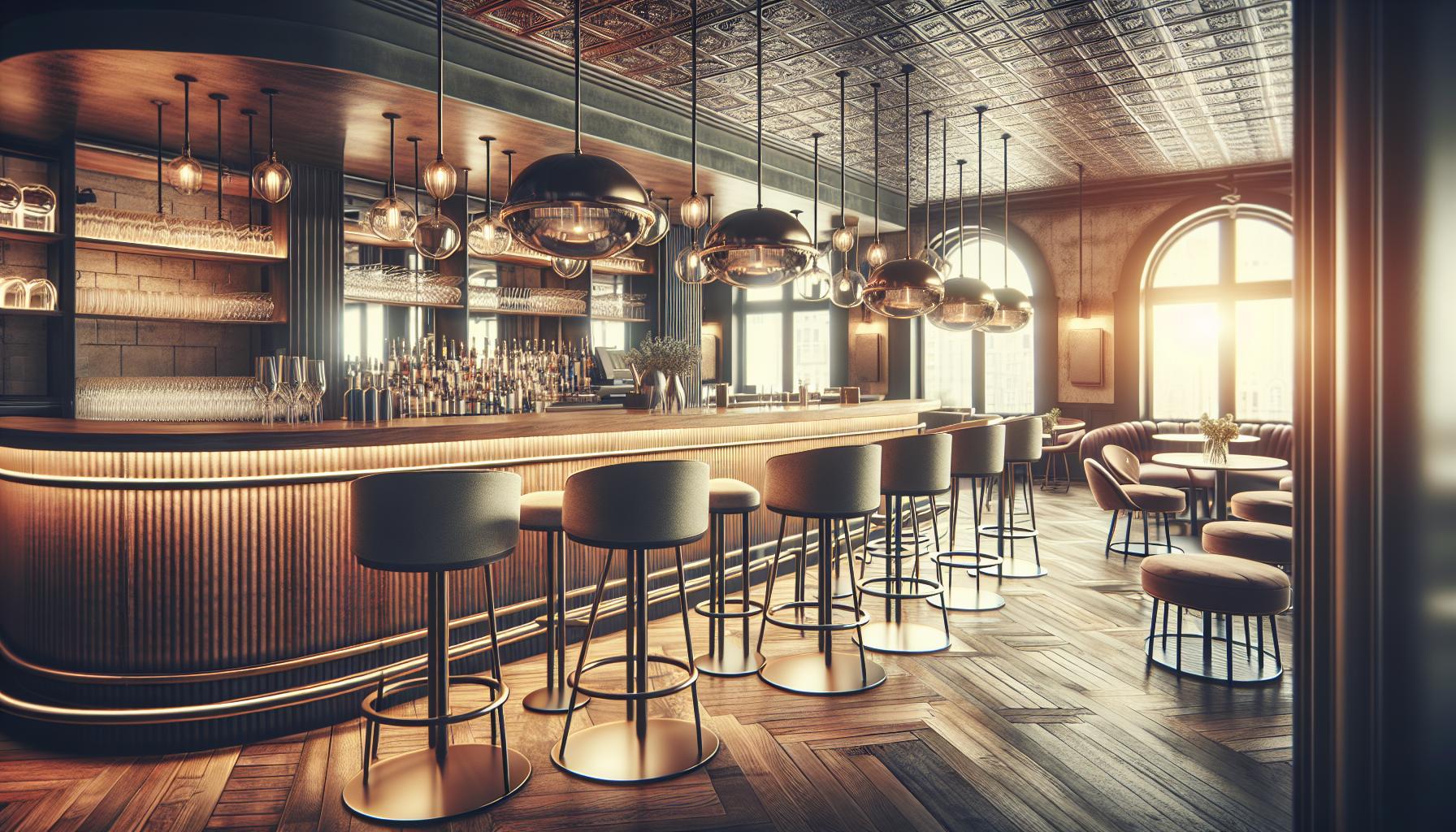
Creating a chic bar setting involves thoughtful style considerations that reflect personal aesthetic and functional needs. The choice of bar furniture influences the overall atmosphere, ensuring it aligns with the desired theme.
Modern Designs
Modern bar furniture features clean lines and minimalistic designs. It incorporates materials such as metal, glass, and polished wood, promoting a sleek, contemporary look. Popular choices include:
- Bar Stools: Adjustable height stools with ergonomic designs enhance comfort. Options with a metal frame and upholstered seat prioritise style and support.
- Bar Tables: High-top tables in geometric shapes provide a striking focal point. Select finishes like glass or matte black to complement a modern décor.
- Accents: Incorporate pendant lighting made from materials like metal or glass to emphasise a modern bar vibe.
- Bar Stools: Choose stools with tufted fabric or leather upholstery for a classic look. Vintage wooden frames enhance authenticity and warmth.
- Bar Tables: Round, pedestal tables crafted from reclaimed wood create an inviting, nostalgic atmosphere. Consider antique finishes to resonate with vintage aesthetics.
- Accents: Accessorise with vintage barware and decorative items for added authenticity. Items like glass decanters or retro serving trays unify the vintage style.
Functional Aspects
Bar furniture must emphasise function in addition to style. Both space optimisation and comfort contribute to the overall experience within a bar setting.
Space Optimisation
Effective space optimisation is crucial for a well-designed bar area. Utilise furniture that complements the available space while promoting movement. Choose bar tables with a height of 90 to 110 cm that create intimate seating arrangements without overcrowding. Consider using nesting tables, stackable stools, or benches that can be easily rearranged to accommodate larger groups during busy periods. Position furniture to create clear pathways, allowing guests to navigate comfortably without interruption.
Comfort and Ergonomics
Comfort and ergonomics play a significant role in bar furniture selection. Opt for bar stools with proper lumbar support and height-adjustable features, enabling users to find their preferred seating position. Stools should maintain a height of 65 to 80 cm for standard counters, ensuring that guests can sit comfortably without strain. Furthermore, consider cushioned seating options in durable upholstery to enhance comfort during extended periods of use. Keep the overall layout in mind, ensuring that guests can enjoy both privacy and social interaction.
Material Choices
Selecting the right materials for bar furniture enhances both aesthetics and durability. Various material choices influence the overall look and functionality of a bar setting.
Wood
Wood offers a timeless appeal and provides a warm, inviting atmosphere. Options include hardwoods like oak and walnut, known for their robustness and longevity. Softwoods, such as pine, are lighter and often more affordable, making them suitable for casual settings. Proper treatments and finishes help protect wood from moisture and stains, ensuring that the furniture remains attractive for years.
Metal
Metal boasts a sleek, modern appearance ideal for contemporary bar designs. Stainless steel and aluminium are popular choices due to their resistance to corrosion and ease of maintenance. Metal furniture often complements industrial-style spaces and aligns well with glass elements. Additionally, metal chairs and tables provide stability and durability, standing up to regular use in busy environments.
Upholstered Fabrics
Upholstered fabrics enhance comfort and add texture to bar furniture. Materials such as leather, faux leather, and high-quality textiles offer a range of options for style and maintenance. Fabrics should be durable and easy to clean, particularly in high-traffic areas. Upholstered seating options, especially those with padded cushions, improve the overall comfort level, making it ideal for extended periods of use.
Conclusion
Investing in the right bar furniture can transform any space into a chic gathering spot. By carefully considering styles and materials that align with personal aesthetics and functional needs, one can create an inviting atmosphere.
The right bar stools and tables not only enhance the visual appeal but also ensure comfort and practicality. Opting for durable materials guarantees longevity while maintaining a sophisticated look.
Ultimately, a well-curated selection of bar furniture sets the stage for memorable gatherings and elevates the overall experience for guests. Thoughtful choices lead to a stylish yet functional bar setting that reflects individual taste and hospitality.
Frequently Asked Questions
What is the importance of selecting the right bar furniture?
Choosing the right bar furniture is crucial as it enhances the aesthetics and functionality of the space. Well-selected furniture can create an inviting atmosphere, improve ergonomics, and ensure comfort for guests, making it an essential element for both home and commercial bar settings.
What heights are ideal for bar stools and tables?
Bar stools should ideally range from 65 to 80 cm in height for standard counters, while bar tables should be between 90 and 110 cm. These height ranges ensure comfort and proper sitting posture, enhancing the overall experience for guests.
What materials are best for bar furniture?
Wood, metal, and upholstered fabrics are popular choices for bar furniture. Hardwoods like oak and walnut offer durability and warmth, while metals like stainless steel provide a sleek look. High-quality fabrics like leather enhance comfort, especially in high-traffic areas.
How does furniture selection affect a bar’s atmosphere?
The style and type of bar furniture significantly influence the overall atmosphere and theme. Modern furniture with clean lines creates a minimalist look, while vintage styles add elegance. The right selection sets the tone for social interactions and enhances the guest experience.
How can bar space be optimised?
To optimise bar space, choose furniture that compliments the layout without overcrowding. Consider using nesting tables, stackable stools, or benches for flexibility. Creating intimate seating arrangements ensures comfort and encourages interaction, especially during busy periods.
What are ergonomic considerations for bar stools?
When selecting bar stools, look for options with lumbar support, height-adjustable features, and cushioned seating. These considerations ensure comfort during extended use, promoting a positive experience for guests and minimising fatigue.