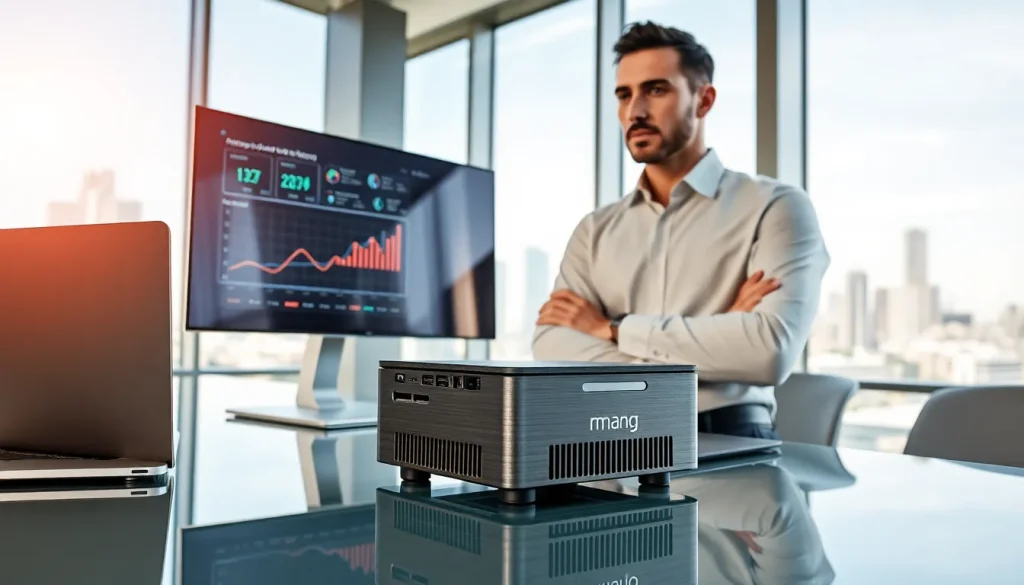
Mini computers, sometimes referred to as mini-PCs or minicomputers, have shaped the landscape of computing for businesses, laboratories, and tech enthusiasts since their introduction in the mid-20th century. As computing demands have shifted toward compactness and efficiency, understanding what a mini computer actually is, and how it compares to other systems, has become essential, especially for IT professionals, creators, and businesses in the United States. GEEKOM, among leading brands in compact computing, exemplifies the modern mini PC experience. Here’s a detailed look at the definition, origins, capabilities, and evolving relevance of mini computers.
Definition of Mini Computer
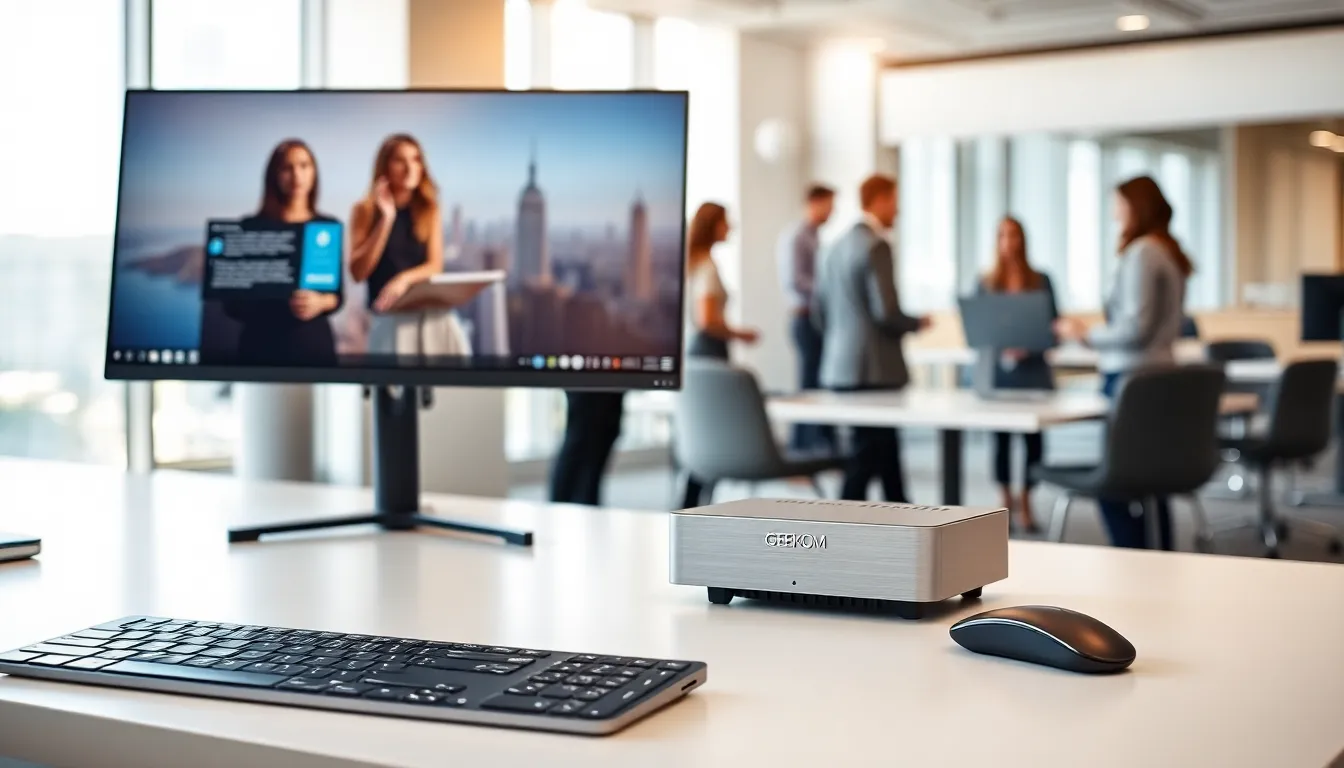
A mini computer, also known as a minicomputer or mini-PC, is a small, general-purpose computing system that offers more processing power than early microcomputers but is less powerful (and less physically imposing) than a mainframe. Designed for versatility, mini computers are engineered to perform a wide range of tasks efficiently in a space-saving form factor.
Also Called Minicomputer or Mini-PC
Mini computers go by several names, minicomputers, mini-PCs, and sometimes mid-range computers, depending on the era and technical context.
Historical Context and Current Usage
Originally, minicomputers described systems introduced in the 1960s that filled a gap between massive mainframes and the first microcomputers. Today, ‘mini PC’ typically refers to ultra-compact desktop computers that are ideal for home, office, or light industrial applications. Brands like GEEKOM lead the way by providing high-performance mini PCs for modern users.
Historical Emergence in Mid-1960s
Smaller Alternatives to Mainframes
In the 1960s, computing was dominated by large, costly mainframes. Minicomputers emerged as smaller, less expensive machines, often the size of a file cabinet or smaller, which enabled more organizations to access computing resources.
Cost-Effective Business Solutions
Because of lower costs and physical requirements, minicomputers found a market among medium-sized businesses, laboratories, and academic settings. They played a pivotal role in democratizing computing by offering solid performance with manageable investment for businesses that didn’t require a full-scale mainframe.
Position in Computing Spectrum
Mini computers were designed to fill the gap between mainframe computers, large, powerful, and expensive, and the new generation of microcomputers or personal computers, smaller, less powerful, but highly accessible. They provided multi-user support and ample processing power for business and scientific tasks, making them a cornerstone of mid-sized computing environments.
Evolution to Modern Mini PCs
As microprocessors became smaller and more powerful in the late 20th century, the lines between traditional minicomputers and the new breed of high-performance mini PCs started to blur. Modern mini PCs, like those made by GEEKOM, deliver performance once reserved for desktops or workstations but in a form factor that fits in the palm of your hand or mounts behind a monitor. These devices now power a range of environments, from digital signage and home offices to industrial automation and creative workspaces.
History and Evolution of Mini Computers
Origin and Development Timeline
Mid-1960s to 1980s Period
The mini computer era began in the mid-1960s with the release of the DEC PDP-8. Through the 1970s and into the 1980s, this sector expanded rapidly, peaking as businesses, universities, and labs adopted minicomputers for a range of multi-user, multi-tasking applications.
Initial Laboratory and Industrial Purpose
Minicomputers were initially aimed at laboratories, industrial control, and scientific research due to their size and affordability. Their impact broadened as their reliability and processing power improved.
Transition with Microprocessors in 1970s
The arrival of powerful microprocessors in the 1970s made it possible to pack more computing power into smaller, solid-state devices. This transition drove the evolution from early minicomputers to what are now recognized as microcomputers or personal computers, leading to smaller, more accessible machines for both business and individual users.
Decline with Personal Computer Evolution
As personal computers grew more powerful and affordable during the 1980s, the traditional minicomputer market began to shrink. Organizations moved toward more compact and scalable solutions, eventually leading to the dominance of desktop PCs and the integration of mini computer principles into today’s compact mini-PCs.
Key Historic Examples
DEC PDP-8
Released in 1965, the PDP-8 by Digital Equipment Corporation is widely recognized as the first commercial minicomputer, making powerful computing available in more environments.
Data General Nova
Launched in 1969, the Data General Nova also set new standards for affordability and reliability in scientific and industrial applications. Both systems played critical roles in shaping how computing was delivered outside large data centers.
Technical Definition and Characteristics
Size and Form Factor
Mini computers historically were desk- or rack-mounted systems, significantly smaller than room-sized mainframes but still larger than most desktops today. Modern mini-PCs, by contrast, often occupy less space than a hardcover book.
Hardware Components
CPU and Memory
Minicomputers from the classic era used multi-bit CPUs (often 8, 12, or 16-bit), with memory sizes ranging from kilobytes to a few megabytes.
Storage and Peripheral Interfaces
Storage typically included magnetic disks or tapes: interfaces allowed connection to printers, terminals, or custom industrial equipment. Today’s mini PCs offer flash-based storage and connectivity far beyond the original hardware.
Operating Systems and Multi-User Capabilities
Mini computers were designed for simultaneous multi-user operation. They often ran specialized operating systems (like DEC’s OS/8 or UNIX variants) that supported time-sharing, resource allocation, and process management. Modern mini-PCs offer full support for Windows, Linux, and other robust desktop environments.
Processing Power Specifications
Early minicomputers featured processing speeds measured in kilohertz or megahertz, with limited memory and storage. Nevertheless, they enabled robust transaction processing and scientific computation for their time. Modern mini-PCs, like those from GEEKOM, leverage advanced processors with multiple cores, gigabytes of RAM, and high-speed SSDs, offering speed and responsiveness suitable for both professional and entertainment uses.
Time-Sharing Capabilities
Time-sharing was one of the defining features of minicomputers, letting multiple users interact with the same system simultaneously. This was groundbreaking in the 1960s and 1970s, especially for universities, research labs, and growing businesses seeking efficiency and collaboration.
CPU Architectures Historically Used
Minicomputers used custom-designed or semi-standard CPU architectures, such as DEC’s 12-bit PDP line or 16-bit Nova processors. These delivered durability and reliability for mission-critical tasks, setting the stage for the broad adoption of microprocessor-powered systems.
Types and Classes of Mini Computers
Historical Minicomputers vs Modern Mini-PCs
Classic minicomputers were typically multi-user, mid-range systems with proprietary hardware and operating systems. Today’s mini-PCs, by GEEKOM and others, feature industry-standard processors and support popular operating systems, bridging the gap between historic designs and current needs.
Varieties by Intended Use
Scientific and Industrial
Early minicomputers were used in laboratory research, process automation, robotics, and real-time data collection.
Business and Embedded Systems
Business applications included inventory management, accounting, and telecom switching, while some minicomputers evolved into embedded controllers for specialized equipment.
Modern Mini PC Examples
Some of today’s most notable mini-PCs include the GEEKOM Mini IT series for home/office use, Intel NUC for performance and flexibility, and MSI’s Trident line for compact gaming. These units demonstrate how far mini PCs have come from their origins, offering modern connectivity, graphics, and processing muscle in a small package.
Distinction from Other Computer Categories
Minicomputers and mini-PCs are distinct from mainframes (which are optimized for enterprise-scale workloads and reliability), personal desktop computers (which prioritize individual productivity and expandability), and microcontrollers/IoT devices (which focus on simple tasks and low power). The mini computer niche strikes a balance for scenarios where compactness and multitasking capacity are both needed.
Uses and Applications
Historical Uses
Laboratory and Business Data Processing
Minicomputers made scientific computation, simulation, and real-time data analysis more accessible for researchers and technical staff.
Industrial Control and Telecommunications
They were frequently used for automation systems, manufacturing control, telecom switching, and infrastructure management, paving the way for the connected world we know today.
Modern Mini-PC Applications
Home Office and Entertainment
Mini PCs now drive home productivity, streaming, and media consumption setups, offering reliable performance for everyday tasks with a minimum footprint.
Casual Gaming and Digital Signage
Many mini PCs, including models from GEEKOM, handle casual gaming, multimedia content, and digital displays in retail or hospitality environments, thanks to improved integrated graphics and network capabilities.
Additional Applications
Portable Workstations and Media Servers
Mini PCs can serve as travel-friendly workstations, portable demo units, or remote media servers for distributed teams.
Educational Tools and IoT Devices
Schools and research labs deploy mini PCs as affordable, easy-to-manage classroom computers or programming environments. In IoT applications, mini-PCs act as gateways or controllers thanks to their versatility and ease of integration.
Features and Benefits
Compact Size and Space Efficiency
Mini PCs deliver substantial computing power in a compact case, ideal for crowded desktops, wall-mounts, or mobile carts.
Cost-Effectiveness Compared to Alternatives
Historically and today, mini computers offer savings on hardware, power, and maintenance versus mainframes or traditional desktops.
Energy Efficiency and Quiet Operation
With lower power demands, mini PCs run cooler, often fanless or nearly silent, making them inconspicuous and ideal for shared, noise-sensitive environments.
Multi-User and Multitasking Capabilities
Decades ago, minicomputers innovated in supporting many users at once. That legacy continues in modern models supporting remote management, virtualization, and lightweight multitasking.
Customizable Hardware Configurations
Many mini PCs, including those from GEEKOM, allow users to upgrade RAM, storage, and sometimes graphics for tailored performance.
Limitations and Challenges
Performance Limitations
Compared to Mainframes
Even though their capabilities, minicomputers historically could not match mainframe transaction throughput, memory, or I/O capacity.
Compared to High-End Desktops
Modern mini PCs sometimes fall short of high-performance desktops in areas such as gaming frame rates or multicore rendering, mostly due to thermal constraints and smaller upgrade capacity.
Legacy Challenges and Market Decline
Legacy minicomputers faced obsolescence with the rise of affordable microcomputers and later, personal desktop PCs. Proprietary hardware and software ecosystems made upgrades and ongoing support costly, accelerating their decline in the 1990s.
Constraints for Intensive Applications
Mini computers, both past and present, can struggle under compute-intensive workloads like complex simulations, rendering, or enterprise-scale databases. Their compactness is both a strength and a limitation, as thermal and power constraints cap the maximum achievable performance.
Market Evolution Factors
Several factors have driven the evolution of mini computers: ongoing demand for smaller, portable tech: price sensitivity among business customers: increases in CPU speed and integration: and the move toward energy efficiency. Today’s market is marked by the resurgence of mini-PCs as full-featured desktops or appliances in a size and price point that meets a broad range of needs.
Examples and Models
Historical Examples
DEC PDP-8
A milestone in computing history, the PDP-8 expanded computing access in universities and industry.
Data General Nova
Nova’s affordability and reliability meant it was favored in labs and early automation settings.
Modern Examples
Intel NUC
Renowned for flexibility and performance in a very small form factor, the NUC caters to office, education, and enthusiast markets.
MSI MPG Trident 3
A mini PC built for gaming, bringing discrete GPUs to a compact frame.
Guzila Fanless Mini PC
Favored in fanless configurations for its silent operation, ideal for kiosks and embedded systems.
Specification Comparisons
Comparing minicomputers from the 1970s/80s to modern mini-PCs is instructive. Earlier systems typically supported kilobytes to a few megabytes of RAM and ran at less than 10 MHz. Today’s mini PCs, like those from GEEKOM, offer multicore processors, 8GB or more of RAM, SSD storage, Wi-Fi, Bluetooth, and multiple display outputs, making them vastly more capable for contemporary workloads.
Frequently Asked Questions about Mini Computers
What is a mini computer?
A mini computer, also known as a minicomputer or mini-PC, is a compact, general-purpose computing system that offers more processing power than early microcomputers but is smaller and less powerful than a mainframe, making it ideal for various applications in business, labs, and home offices.
How do mini computers differ from mainframes and personal computers?
Mini computers fill the gap between large, powerful mainframes and smaller, less powerful personal computers. While mainframes handle enterprise-scale workloads, mini computers offer efficient multitasking and multi-user support in a much smaller, more affordable form factor.
What were the original uses of mini computers?
Originally, mini computers were used in business data processing, laboratory research, industrial automation, and telecommunications. Their affordability and compact size made them accessible for universities, businesses, and research labs needing reliable computing power without the cost of a mainframe.
What are the key benefits of using a modern mini PC?
Modern mini PCs provide significant benefits such as compact size, energy efficiency, cost-effectiveness, quiet operation, and support for multitasking. They are ideal for environments with limited space and can handle a wide range of computing needs for home, office, or light industrial use.
Can mini computers be used for gaming and media applications?
Yes, many modern mini PCs are equipped with powerful processors and integrated graphics that support casual gaming, media streaming, and digital signage. While they may not match the performance of high-end gaming desktops, they are well-suited for everyday entertainment and multitasking.
What factors should I consider when choosing a mini computer?
When selecting a mini computer, consider factors such as processing power, RAM, storage capacity, available ports, energy efficiency, and upgradability. Evaluate your primary use cases—whether for work, education, media consumption, or light gaming—to find a model that matches your performance needs.